
If you want back the home you lost, at up to 10% bigger, EO1 is almost always the right path. If you want a meaningfully bigger house, you are looking at EO8 (or, outside the Coastal Zone, a standard zoning-compliant permit), and you should go in knowing it costs you City fees on the extra area and a higher property tax bill for as long as you own the home. Both paths are fast-tracked. The real decision is size against tax base, and it is worth making before your architect draws a line.
What EO1 and EO8 actually are
After the January 2025 fire, Mayor Bass issued a series of emergency executive orders to speed up rebuilding in the City of Los Angeles. Two of them define how most Palisades homeowners will rebuild.
EO1, like-for-like. You rebuild the same use (a single-family home stays a single-family home) in substantially the same location, at no more than 110% of the floor area, height and bulk of what burned. City zoning review is waived, the state’s environmental review (CEQA) and coastal permit are suspended, and City departments are directed to finish their review of a complete application within 30 days.
EO8, build beyond 110%. Issued in July 2025 to line up with the Governor’s order, EO8 covers single-family homes in the Coastal Zone that go past the like-for-like limit but meet today’s zoning code. Before EO8, a home like that needed a local coastal development permit and environmental review, a process that could run 18 to 24 months. Now it skips both and moves on the City’s expedited rebuild track.
Not in the Coastal Zone? Then you do not need EO8 at all. A bigger home that meets zoning is filed straight with Building and Safety and still gets the expedited rebuild review. The tax and fee points below apply to you the same way.
Where the 110% line really bites
The 10% sounds generous until you see what it is measured against: the floor area, height and bulk of the home that burned. A 2,800 square foot house gets you up to about 3,080 square feet under EO1. That is room for a bigger primary suite or a real mudroom, not for a second story that was never there.
What EO1 does give you is something EO8 cannot: you keep what the old house had, even where it no longer fits today’s rules. If your home sat closer to the side yard than current setbacks allow, or was taller than today’s limit, like-for-like lets you rebuild it that way. The moment you step up to EO8, every objective zoning standard applies: setbacks, height, floor area, and a minimum of 10 feet from a canyon bluff or 25 feet from a coastal bluff. On some older lots, going “bigger” under EO8 can actually cost you usable space in places you had it before.
What each path lets you add
- Under EO1 you can add an ADU. Things the old house did not have, like a new pool or new retaining walls, fall outside like-for-like and need their own permits.
- Under EO8 an ADU, a basement, retaining walls and a pool can all be part of the one project.
If a basement or pool is on the list, tell your soils engineer before he drills. Both change where he puts his borings and what he recommends, and a report that did not plan for them means paying for a second visit.
Fees: waived up to 110%, not beyond
The City waives its permit and clearance fees for rebuilds, but only for people who owned the property at the time of the fire, and only up to 110% of the area of the home that burned. Everything above that line pays full fees. On a large EO8 home that is a real line item, so it belongs in the budget from the first meeting, not as a surprise at permit issuance.
The part nobody likes: property taxes
California lets a rebuilt home keep its old Prop 13 assessed value as long as the new home is “substantially equivalent” to the one destroyed. In December 2025, LA County confirmed it treats a rebuild of up to 110% of the old square footage as substantially equivalent. So an EO1 rebuild keeps your existing tax base.
Build beyond that and the extra square footage is assessed as new construction at today’s value, then added on top of your existing base. You do not lose your old base on the original portion, but the new portion is taxed at current value, every year, for as long as you own the house.
Keeps your Prop 13 base
Treated as substantially equivalent. Your assessed value carries over from before the fire.
Assessed as new construction
Only the added square footage, valued at today’s market, then added to your base.
For some families that is an easy trade: a home that fits how they live now, on one of the best pieces of land in the city. For others, especially long-time owners with a very low base, the tax difference decides it. Either way, it should be a decision, not a discovery.
Is EO8 slower?
Not in any way that should drive the choice. Both paths move on the City’s expedited rebuild track. On our City of LA rebuilds, each round of plan check corrections is typically turned around in 1 to 3 weeks, against 3 to 5 weeks on a standard custom home, and most projects still see more than one round. What does slow a bigger home down is everything a bigger design brings with it: a basement means more excavation and a more involved soils report, a hillside lot in a geohazard zone needs a combined geology and soils report approved by the Grading Division, and a larger house simply takes longer to draw and engineer.
How we help owners decide
Before anything is designed, we sit down with four questions:
- How big was the house that burned, really? We pull the permit history and assessor records, because 110% is measured against the documented home, not memory.
- Did the old house have anything today’s code would not allow? Tight setbacks or extra height are worth keeping under EO1.
- What is on the wish list that like-for-like cannot hold? A basement, a pool, a second story, retaining walls.
- What does the extra square footage cost you every year? Fees above 110% once, property tax on the added area forever.
Then we sketch both versions, like-for-like and the bigger home, so the family can compare real plans instead of guessing.
A real example: El Medio Bluffs
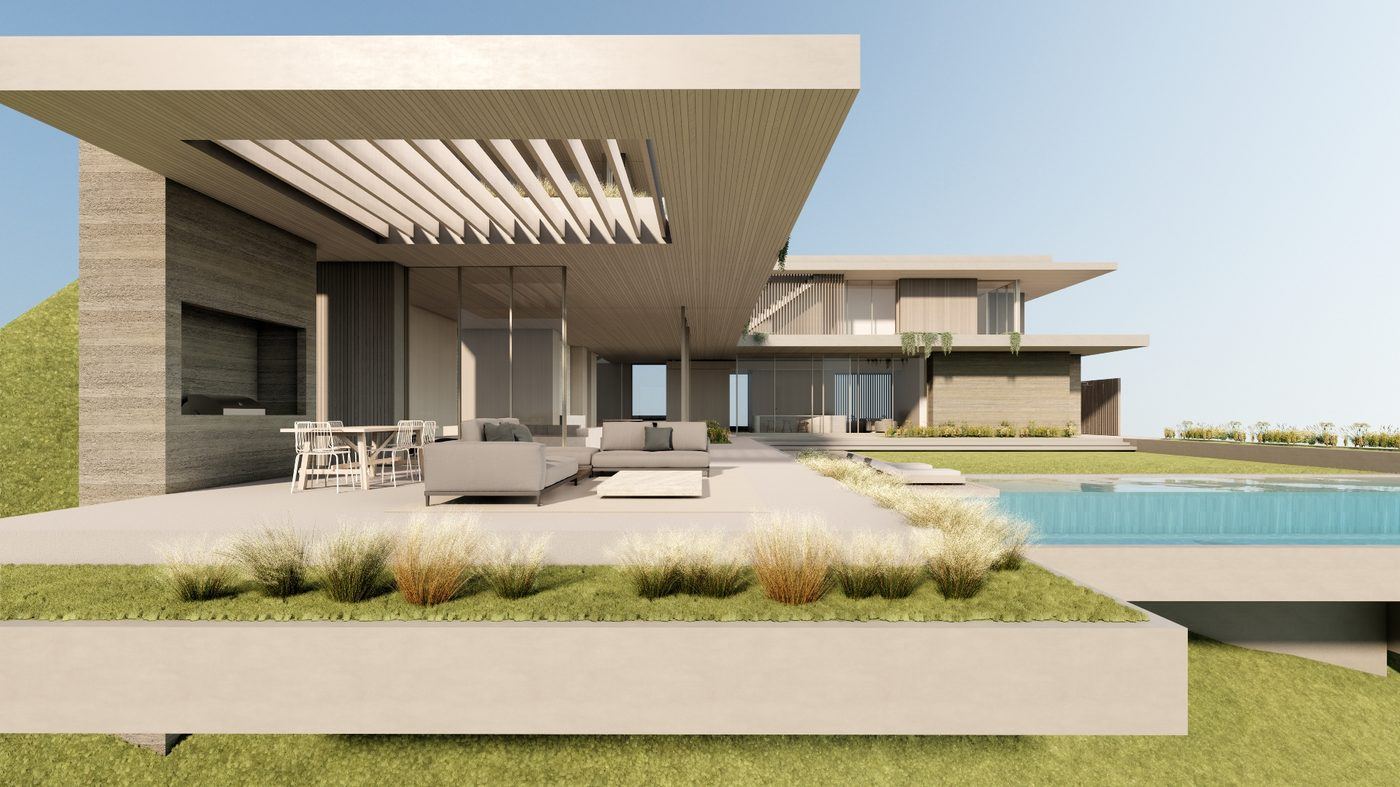
One of the homes we are designing right now sits on a corner lot on Asilomar in El Medio Bluffs, one of only about ten homes on the street with an unobstructed view of the ocean. The new house is a contemporary home of about 4,100 square feet, more than 10% bigger than the one that burned. The lot is in the Coastal Zone, so it is being filed under EO8. That means the design has to meet every current zoning standard rather than following the old footprint, and City fees and new construction tax apply to the added area. It also means it avoids the coastal permit process that could have added a year or two before anyone broke ground.
Builder’s notes, by email
Get the next post in your inbox
A new post every two weeks on building a custom home in Los Angeles: soils, plan check, budgets and what really happens on site. Written by Ram Gabay, the builder. Unsubscribe anytime.
Please enter a valid email address.
You’re on the list
Thanks for subscribing.
A welcome note is on its way to your inbox. The next post will follow when it goes live.
Common questions
Can I use EO1 and still add an ADU?
Yes. A new ADU is allowed alongside a like-for-like rebuild.
Do I need EO8 if my lot is not in the Coastal Zone?
No. EO8 is specifically for the Coastal Zone. Outside it, a larger home that meets zoning is filed directly with Building and Safety and still gets expedited review.
Will building bigger raise my property taxes?
Yes, on the added portion. LA County treats up to 110% of the old square footage as substantially equivalent, which keeps your existing base. Anything beyond that is assessed as new construction at current value and added to your bill.
Are City fees waived if I bought the lot after the fire?
No. The fee waiver applies only to people who owned the property at the time of the fire, and only up to 110% of the destroyed home’s area.
Fire rebuild rules have changed several times since January 2025 and may change again. This reflects the City’s orders and the County’s assessment standards as of fall 2026. Sources: City of Los Angeles Emergency Executive Orders 1 and 8, Ordinance 188985, California Revenue and Taxation Code Section 70, LA County post-disaster assessment standards (December 2025).
Everything else about rebuilding in the Palisades, from geohazard zones to getting LADWP to connect your power, is on one page.
Pacific Palisades RebuildHow long a soils report really takes
Rebuilding in the Palisades?
The first conversation is 30 minutes. No pitch, no pressure. We’ll tell you honestly whether we’re the right fit, and if we’re not, we’ll tell you that too.
Start a conversation (818) 825-8700
Want a rough number first? Try the cost calculator