
Rebuilding in the Palisades, with a builder already on the ground.
DVLP Construction is a licensed Los Angeles builder with fire rebuilds underway in Pacific Palisades right now. We carry your home from the empty lot to move-in, and we keep you informed at every step.
The rules changed after January 2025. The physics did not.
The City of Los Angeles rewrote a lot of its process for fire-affected homes: faster reviews, waived fees, a dedicated rebuilding center, and a path for architects to certify their own plans. That is real, and it saves months.
What it does not change is the order the work has to happen in. Your lot still needs a survey. Your foundation still needs a soils report. Your structural engineer still cannot finish until both are in hand. Owners who understand that early are the ones who get their permits first.
EO1 or EO8: rebuild what you had, or build bigger?
Two of the Mayor’s emergency orders define the two main ways to rebuild in the Palisades. Which one you choose shapes your design, your fees, your schedule and your property taxes for as long as you own the home.
Like-for-like, up to 110%
Rebuild the home you had, up to 10% larger in footprint and height. The fastest and cheapest path, and the one that protects your property tax base.
Build bigger, still fast-tracked
For single-family homes in the Coastal Zone that go beyond 110% but follow the zoning code. More house, more design freedom, and a permit path that is still far faster than a normal custom home.
| EO1Like-for-like | EO8Build bigger | |
|---|---|---|
| Size | Up to 110% of the footprint and height of the home that burned, in substantially the same location. | As large as the zoning on your lot allows. |
| Zoning | Zoning rules are waived for eligible projects, so you can rebuild what you had even if it no longer fits today’s rules. | Must meet every objective zoning standard: setbacks, height, floor area. Homes must also sit at least 10 feet from a canyon bluff or 25 feet from a coastal bluff. |
| Speed | City departments are directed to review a complete application within 30 days and issue clearances within 5 days. | Also fast-tracked. It skips the local coastal permit and environmental review that used to take 18 to 24 months, and moves on the City’s expedited rebuild track. |
| Extras | A new ADU is allowed. Things the old house did not have, like a new pool or new retaining walls, fall outside like-for-like. | A new ADU, a basement, retaining walls and a pool can all be part of the project. |
| City fees | Waived for owners who held the property at the time of the fire. | Waived only up to the 110% portion. You pay fees on everything above it. |
| Property tax | You keep your existing Prop 13 base value. LA County treats a rebuild up to 110% of the old square footage as equivalent. | Your tax bill goes up. Square footage beyond 110% is assessed as new construction at today’s value and added to your existing base. |
Outside the Coastal Zone, a larger home that complies with zoning is filed directly with Building and Safety and gets the same expedited review as other rebuilds. Sources: City of Los Angeles Emergency Executive Orders 1, 6 and 8; Ordinance 188985 (July 2026); California Revenue and Taxation Code Section 70; Los Angeles County post-disaster assessment standards (December 2025); recovery.lacity.gov. Rules for fire rebuilds keep changing, and property tax questions belong with the County Assessor. Confirm your own project with us or with the One-Stop Rebuilding Center.
Why rebuild permits move faster than a normal custom home.
Every custom home goes through rounds of plan check corrections: the City reviews, sends comments, your architect and engineers answer, and it goes back in. Here is what we see on our own jobs.
Usually 2 to 3 rounds of corrections before approval on a fairly standard build.
Rebuild corrections are turned around much faster under the City’s emergency orders.
Timelines from DVLP projects. Every lot and design is different.
Three things that still set your schedule.
The soils report
Your structural engineer designs the foundation from it, and it takes 4 to 8 weeks once the engineer gets to your lot. Since the fires, good soils engineers have long queues. Order it first.
Why it takes so longThe survey
Your architect’s work depends on it. Survey and soils run side by side, not one after the other, and both should start as soon as you decide to rebuild.
Survey vs soils reportFire-zone construction
Palisades homes are rebuilt to California’s wildfire construction standards: ember-resistant vents, ignition-resistant exterior materials, tempered glass. It shapes your finish choices, so design around it from day one.
Free soils report guideIs your lot in a geohazard zone?
After the fire, Building and Safety mapped the Palisades Geohazard Risk Assessment Zones, known as PGRAZ, and published the list of addresses inside them. Your zone decides which reports you need before you can get a permit.
On or near a slope
Lots on or next to steep slopes or potential landslide areas. A combined geology and soils report is required and must be approved by the LADBS Grading Division. Expect the longest lead time of the three.
Below a slope
Lots at the bottom of steep slopes, where mudslide debris can reach. These also need a combined geology and soils report with Grading Division approval.
Relatively flat
Usually no geology report. A soils report is still required if you dig deeper than 5 feet or take away support from a neighbor’s lot, and soil compaction can be self-certified by your engineer.
How to save time in a PGRAZ zone
- A soils or geology report approved within 10 years before the fire orders, for a similar scope, can often be reused. Reports from before the 2019 building code need a seismic update.
- Neighbors can hire one geotechnical firm to cover several lots at once. The City encourages it because it saves everyone time and money.
- The architect self-certification program does not apply in geologically sensitive areas, so plan on a full City review.
- Reusing your old foundation is allowed if a structural engineer or architect confirms it is sound, but PGRAZ lots may need extra soils investigation first.
Source: LADBS Information Bulletin P/BC 2026-157, Compaction, Soils and Geological Reports for Rebuilding in the Palisades Fire Area (revised February 2026). Not sure which zone you are in? Ask us and we will check your address.
The step nobody plans for: power to the new house.
A finished house cannot be lived in until LADWP connects permanent power, and in the Palisades that has been one of the slowest steps. Homeowners are finishing construction and then waiting on the utility. The fix is to get in line early.
Request the meter spot early
LADWP’s Palisades process starts with approved LADBS plans and a Meter Spot Request. The meter spot alone can take up to 20 business days, and the actual hookup comes after that with no reliable timeline. We file as soon as plans are approved, not when the house is framed, so the utility’s queue runs in the background while we build.
Temporary power has its own permit
A temporary power pole needs an LADBS permit and an LADWP inspection before the meter goes in. We line it up before construction starts so the crew is not stuck waiting on a generator.
Build for undergrounding
LADWP is moving Palisades power lines underground. Running conduit to its future-ready specs now means no one tears up your new driveway or landscaping later.
Sources: LADWP Electric Service Installation Steps for Pacific Palisades Fire Restoration (January 2026); LADWP Pacific Palisades Undergrounding Initiative (2026).
Every family, a very different house.
Every one of these came to us by referral. Images are design renderings of homes in design or under construction.
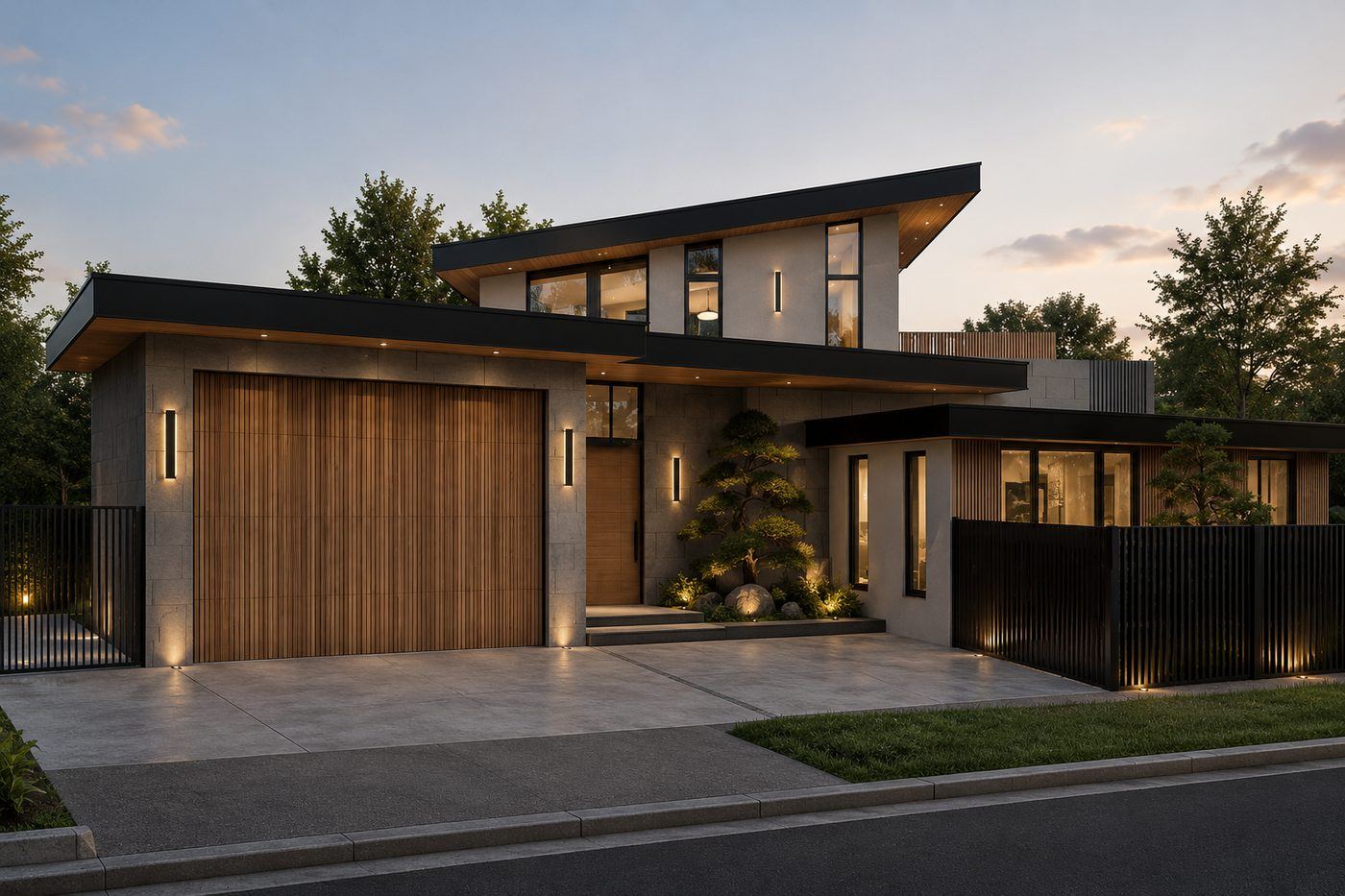 Rendering
A fresh start, after a false start.
This family began their rebuild with another design team, and it did not work out. Rather than push forward with a house they did not love, they started over with a new architect, a new design and DVLP as builder. The result is a calm, modern Japanese inspired home on a flat lot, and it is now being framed.
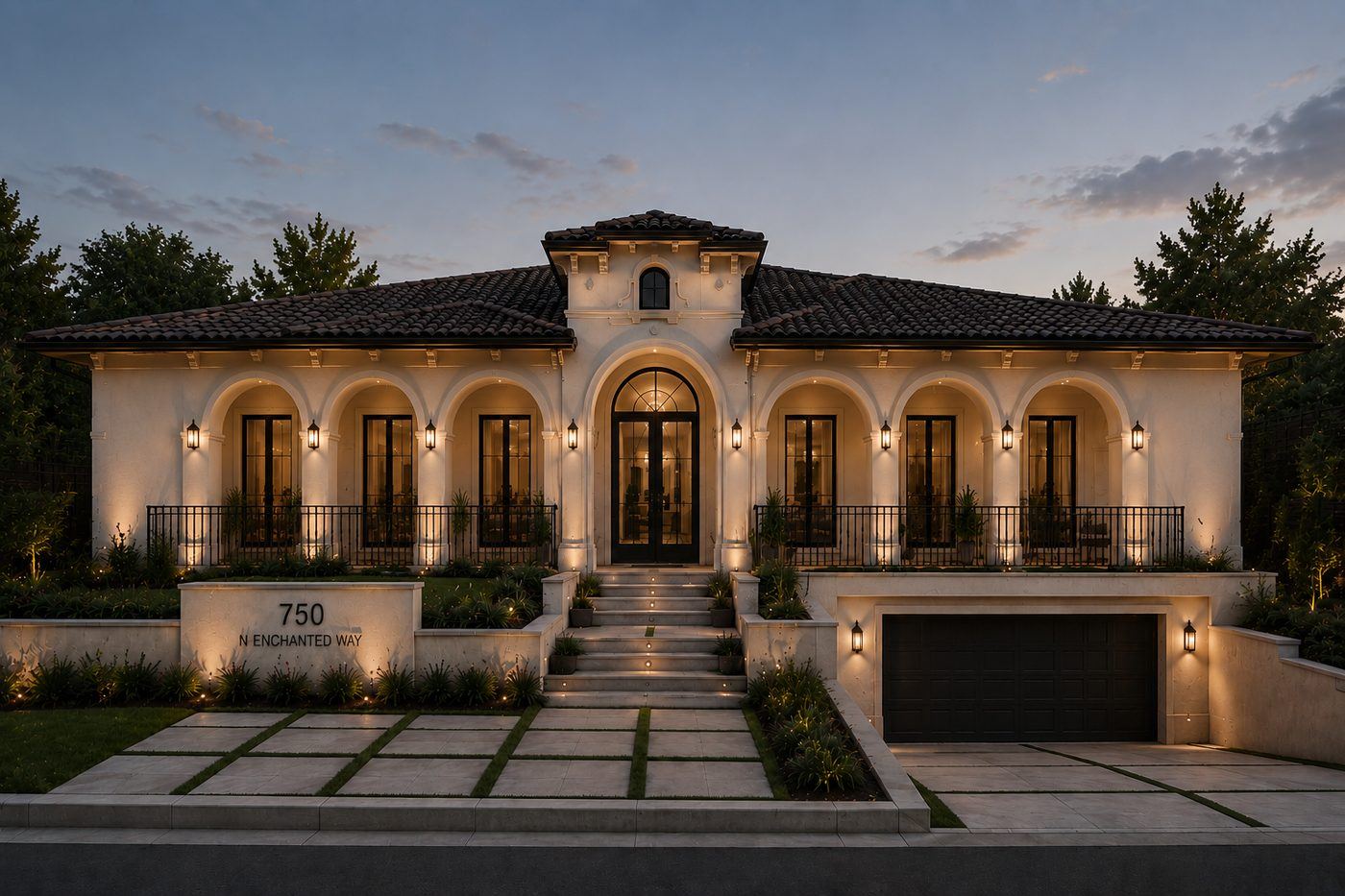 Rendering
More room, without taking the neighbor’s view.
The owner wanted more living space, but a second story would have blocked the ocean view of the home above his. The answer was to go down instead of up: a basement the original house never had, under a Spanish Colonial home. Structurally it is one of the more demanding rebuilds we have, and it is the right one for the site and the street.
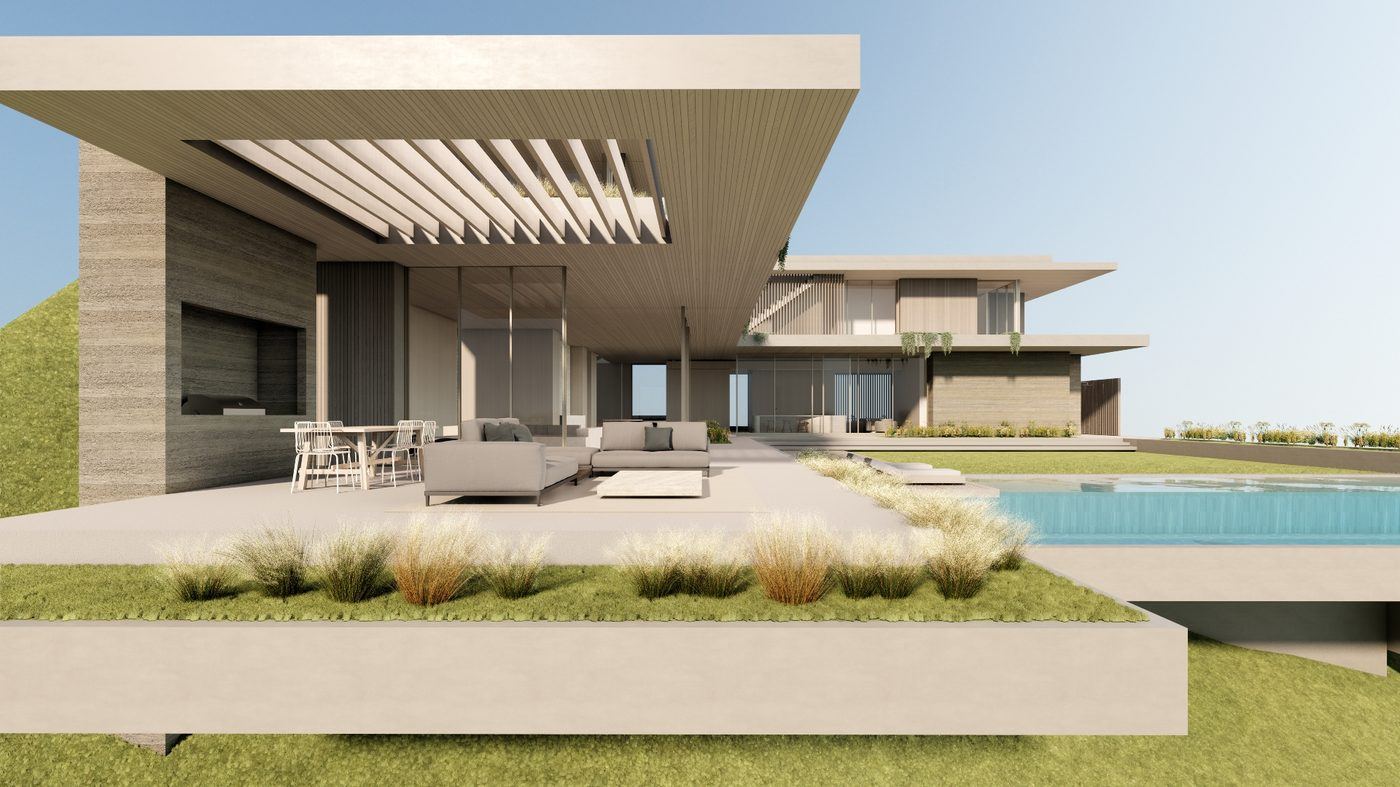 Rendering
An ocean view from every room.
One rule drove the whole design: the Pacific should be visible from every room in the house, not only the living room. That decided where the house sits on the lot, the roofline, how the inside opens to the outside, and where the pool goes. It is currently in review with the City.
Next up: a corner lot on Asilomar.
Only about ten homes on Asilomar get an unobstructed view of the ocean, and this corner lot is one of them. We are designing a contemporary house of about 4,100 square feet around that view. Plans are in progress, and we will share renderings here as they come together.
You make the decisions that matter. We handle the rest.
A first conversation
No pitch. Where you are with insurance and design, what you lost, what worries you most.
The right order
Survey and soils ordered early, consultants lined up so no one waits on anyone else.
Through plan check
We track every correction round with your architect and engineers until the permit is issued.
Build and move in
One dedicated team, a regular update rhythm, and no surprises from the first footing to the keys.
The Palisades Rebuild Roadmap
A step-by-step guide from loss to move-in, written for owners who are rebuilding in the Palisades.
- Insurance and what to settle before design
- City of LA permits, and which rebuild path fits you
- How to choose a builder, and what to ask
- Every decision point from the lot to the keys
No sales call. When the time is right, we are here.
Palisades rebuild questions.
What is the difference between EO1 and EO8?
EO1 is the like-for-like path: rebuild in substantially the same location at up to 110% of the old footprint and height, with zoning waived, City fees waived for owners at the time of the fire, and your Prop 13 tax base preserved. EO8 is for single-family homes in the Coastal Zone that go beyond 110% but follow the zoning code. It is still fast-tracked, but you pay City fees on the portion above 110% and the added square footage raises your property taxes.
Will building bigger raise my property taxes?
Yes, for the added portion. California lets a rebuilt home keep its prior assessed value when it is substantially equivalent, and LA County treats up to 110% of the old square footage as equivalent. Square footage beyond that is assessed as new construction at current value and added to your existing base. Confirm the numbers for your home with the LA County Assessor.
What is PGRAZ?
The Palisades Geohazard Risk Assessment Zones, a map and address list published by LADBS after the fire. Orange zones are on or next to steep slopes or potential landslide areas, and yellow zones sit at the bottom of steep slopes. Lots in either zone need a combined geology and soils report approved by the LADBS Grading Division before the permit.
How long does plan check take for a Palisades rebuild?
On our City of LA rebuilds, each round of corrections is typically turned around in 1 to 3 weeks, compared with 3 to 5 weeks on a standard custom home. Most projects still go through more than one round.
Do I need a new soils report to rebuild?
In most cases, yes. The structural engineer designs your foundation from the soils engineer’s recommendations, and an old report rarely covers a new design, especially one with a basement or pool. A report approved within 10 years for a similar scope can sometimes be reused. A new one takes 4 to 8 weeks, so order it early. Our free guide explains how to read one.
When should I apply for power from LADWP?
As early as possible. LADWP’s Palisades process starts with approved LADBS plans and a Meter Spot Request. The meter spot alone can take up to 20 business days, and the permanent hookup takes longer, with no timeline LADWP will commit to. We file the request as soon as plans are approved so the house is not finished and waiting on power.
Where do I go for City help with my rebuild permit?
The City’s One-Stop Rebuilding Center is at 1828 Sawtelle Blvd, West Los Angeles, and there is a Palisades Inspections and Permitting Support Center at 16925 Marquez Ave. Or call us, and we will tell you where your project stands.
Wherever you are in the process, we can help.
(818) 825-8700 · info@dvlp1.com · Lic. #1054900
Talk to DVLP